

Scheduling is frequently treated as an after-thought activity that’s completed once the plan exists rather than shaping whether that plan is fully achievable in the first place.
But in reality, scheduling is where operational success is either enabled… or quietly undermined.
At Corehesion, scheduling is about aligning people, resources, and work in a way that delivers certainty, efficiency, and performance on the ground.
Why Scheduling Matters
Poor scheduling doesn’t always look like failure. It shows up as:
- Missed deadlines that “almost” made it
- Overtime costs creeping up month after month
- Teams constantly reacting instead of executing
- Resources either stretched thin—or sitting idle
Effective scheduling flips this.
It creates a structured, realistic pathway to delivery by:
- Maximising resource utilisation
- Improving productivity and reducing costs
- Providing clear commitments across teams
- Increasing confidence in meeting deadlines
It turns planning into something operational (not theoretical).
Corehesion’s Scheduling Approach
Corehesion focuses on building schedules that are achievable, transparent, and aligned to real-world constraints.
This means considering:
- Task durations based on actual conditions
- Resource availability, not assumptions
- Workforce constraints like rosters and leave
- Dependencies between tasks and operational priorities
The result is a schedule that doesn’t just look good on paper it actually works in practice.
The Gantt Chart: Visibility and Control
At the core of effective scheduling is the ability to see the full picture clearly.
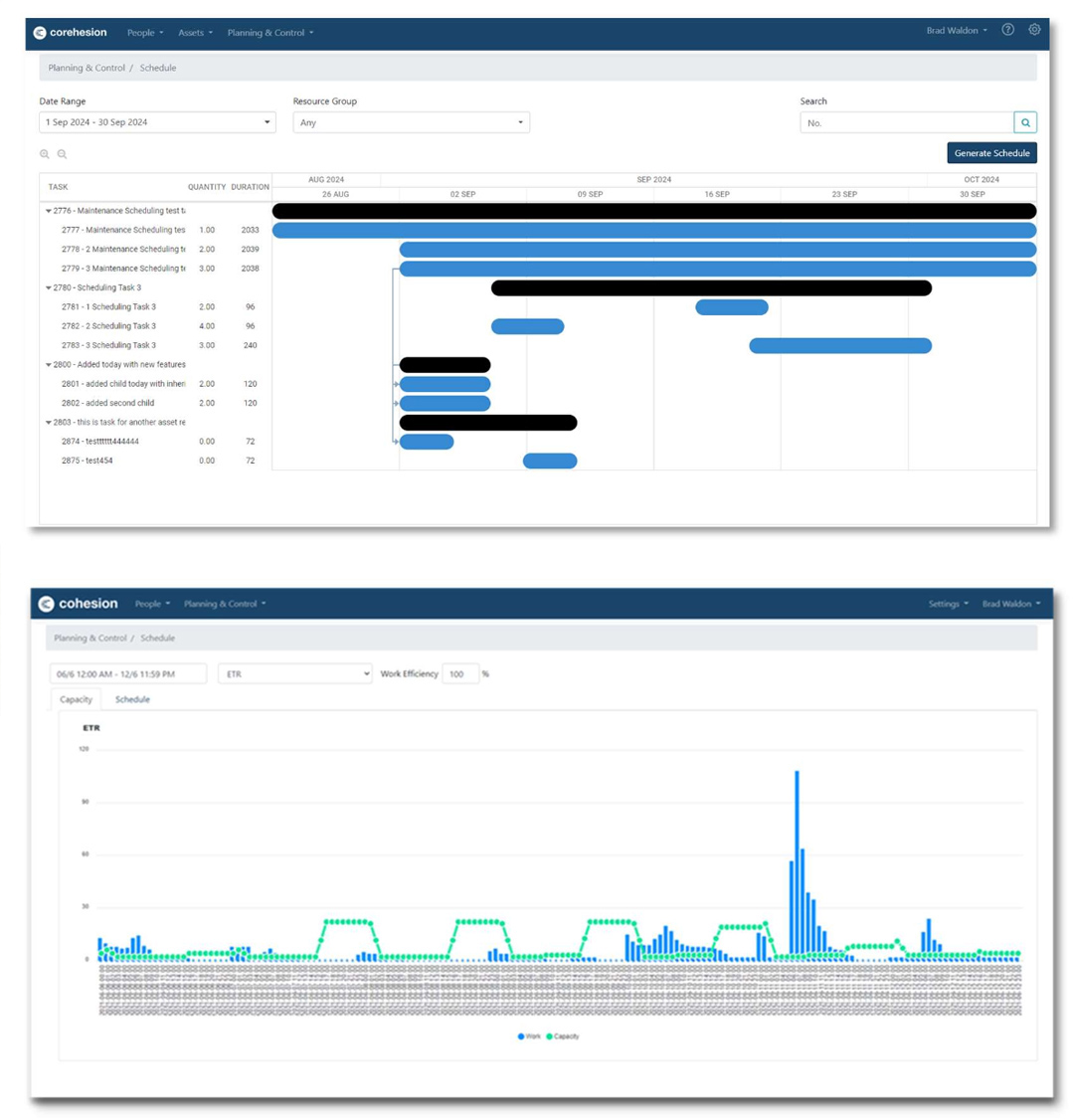
Corehesion’s Gantt Chart provides a visual timeline of work, enabling teams to:
- Understand task sequencing and dependencies
- Identify how delays in one area impact others
- Break work into manageable, structured components
- Assign clear ownership and deadlines
This isn’t just about visual appeal it’s about decision-making.
With integrated inputs such as:
- People and competencies
- Rosters and leave
- Resource groups and assets
- Tasks and operational plans
- Simulation and optimisation capabilities
The Gantt Chart becomes a dynamic planning tool. It allows teams to test scenarios, adjust in real time, and maintain alignment across stakeholders.
The Capacity Chart: Making Schedules Achievable
One of the most common issues in scheduling is simple:
Too much work. Not enough capacity.
The Capacity Chart addresses this directly by showing:
- Available resource capacity
- Required capacity to deliver the plan
- Where over- or under-allocation exists
This enables teams to make informed decisions before issues arise.
Resource Levelling: Smoother Workloads, Better Outcomes
Instead of overloading teams in peaks and leaving gaps in between, resource levelling:
- Redistributes work evenly
- Reduces burnout and inefficiency
- Improves consistency of output
Capacity-Based Scheduling: Planning Within Reality
Rather than building a schedule and hoping resources can meet it, capacity-based scheduling starts with a realistic review on what can actively be delivered.
This ensures:
- Schedules are grounded in actual availability
- Commitments are achievable
- Budget overruns from overtime or extra labour are reduced
Integrated for Accuracy
The Capacity Chart draws on real operational inputs, including:
- People and workforce availability
- Rosters and leave
- Tasks and workloads
- Resource groups
This ensures decisions are based on real capacity.
Confidence in Delivery
When Gantt and Capacity insights work together, something powerful happens:
- Schedules become realistic
- Teams understand expectations clearly
- Bottlenecks are identified early
- Resources are used efficiently
Most importantly you gain confidence that what’s planned will actually be delivered.
Corehesion goes beyond tools by bringing:
- Practical operational experience
- Proven scheduling methodologies
- Integration across systems, people, and processes
- A focus on outcomes, not just outputs
We help organisations move from:
- Reactive scheduling > proactive planning
- Overloaded teams > balanced capacity
- Missed deadlines > predictable delivery
Scheduling is about creating certainty in environments that are inherently complex. Reach out to discuss how we can assist your operations.